Introduction: Rethinking the Future of Food
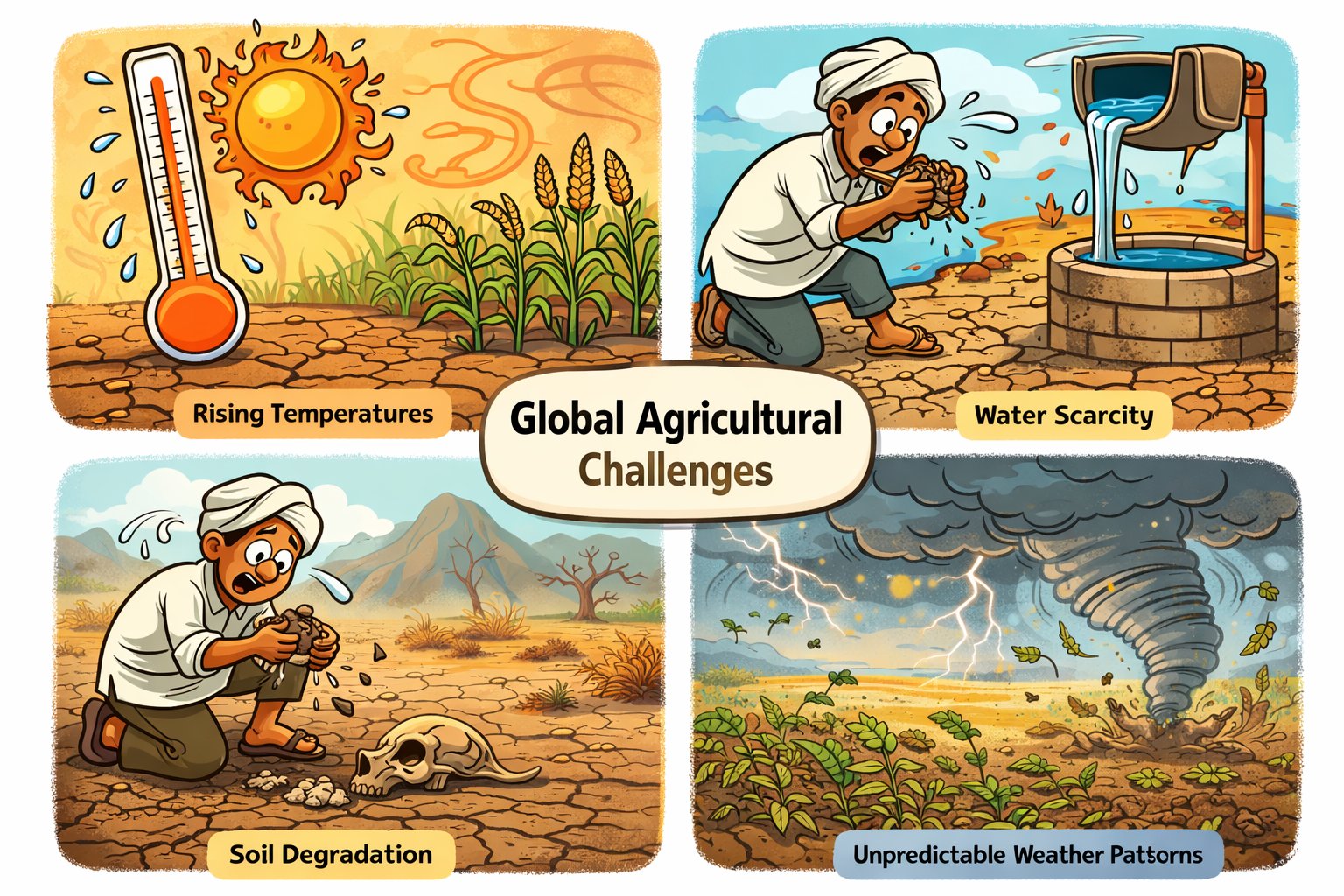
The world is facing a critical food challenge. Rising temperatures, water scarcity, soil degradation, and unpredictable weather patterns are reshaping global agriculture. Traditional farming systems are under pressure, and the demand for sustainable nutrition has never been greater. In this search for resilient food solutions, the answer may lie in one of the harshest environments on Earth — the desert. For centuries, India’s arid regions have cultivated ingredients that survive extreme heat, minimal rainfall, and nutrient-poor soils. Today, these traditional crops are gaining global attention as climate-smart superfoods.
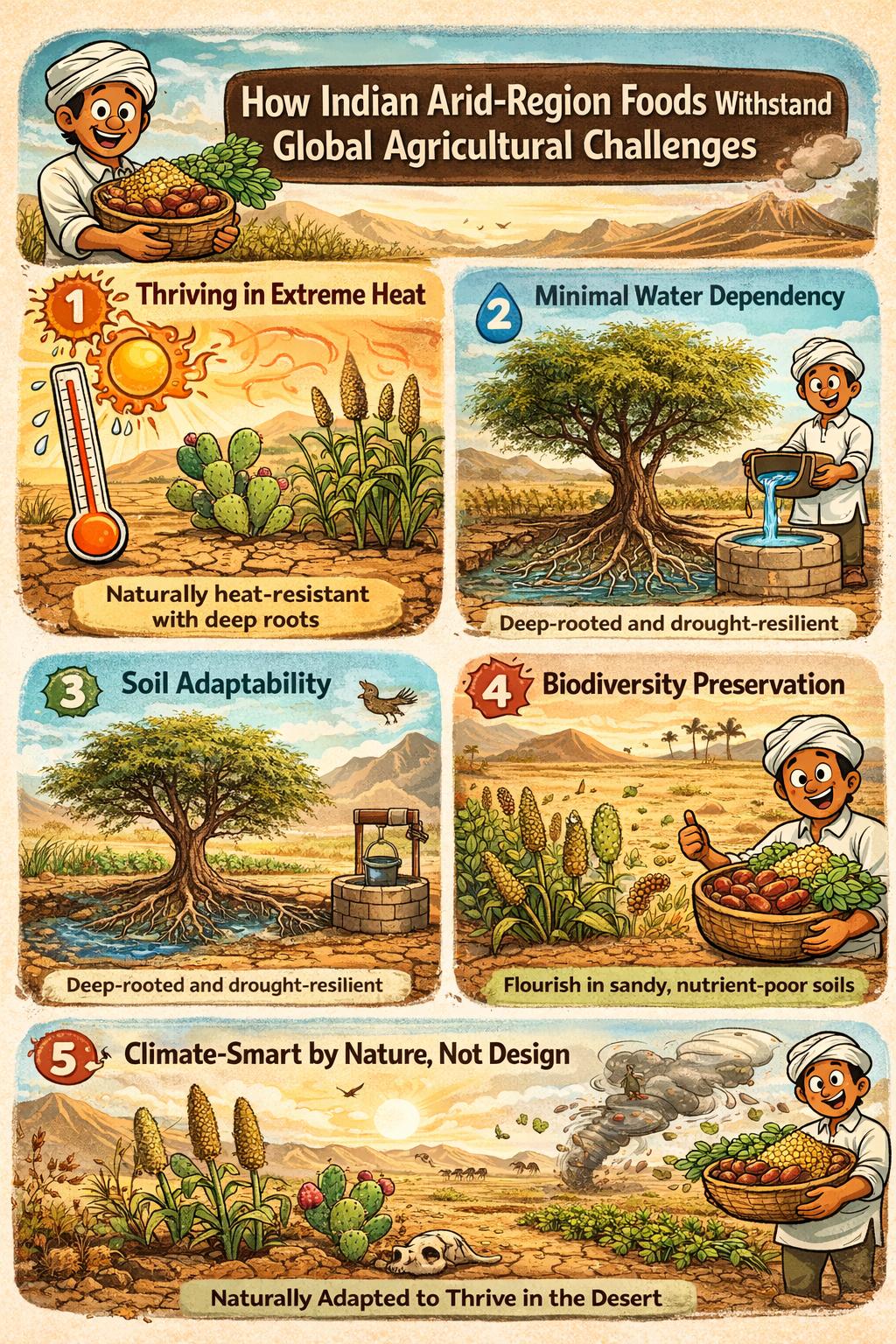
How Indian Arid-Region Foods Withstand Global Agricultural Challenges
As global agriculture struggles with rising temperatures, water shortages, and soil degradation, crops grown in India’s arid regions offer a powerful lesson in resilience. For centuries, these desert-grown ingredients have adapted to extreme conditions — not through technology, but through nature. 🌞 1. Thriving in Extreme Heat Unlike many conventional crops that require stable temperatures, arid-region plants are naturally heat-tolerant. They are adapted to intense sunlight and prolonged dry seasons. Their survival mechanisms include: ● Deep root systems that access underground moisture ● Natural heat resistance ● Strong protective outer layers ● Slow growth cycles that conserve energy This makes them far less vulnerable to rising global temperatures. 💧 2. Minimal Water Dependency Water scarcity is one of the biggest threats to modern agriculture. Desert crops, however, have evolved to survive with very little rainfall. Many require significantly less irrigation compared to water-intensive crops like rice or wheat. Their low water footprint makes them ideal for a climate-stressed future. 🌱 3. Soil Adaptability Degraded and nutrient-poor soils are becoming common worldwide. Indian arid-region crops are naturally suited to sandy and less fertile soils. Instead of demanding heavy chemical fertilizers, they grow efficiently in challenging environments. This reduces soil exhaustion and supports long-term sustainability. 🌾 4. Biodiversity Preservation Unlike monoculture farming systems that depend on single crops, desert agriculture traditionally includes diverse plant varieties. This biodiversity: ● Improves ecosystem balance ● Reduces pest dependency ● Strengthens crop resilience ● Supports sustainable farming communities Diversity is strength — especially in uncertain climates. 🌍 5. Climate-Smart by Nature, Not Design What makes Indian desert foods remarkable is that they were climate-smart long before the term existed. Their resilience is not engineered — it is inherited through generations of adaptation. As the world searches for sustainable food systems, these ingredients provide a blueprint for agriculture that works with nature rather than against it.
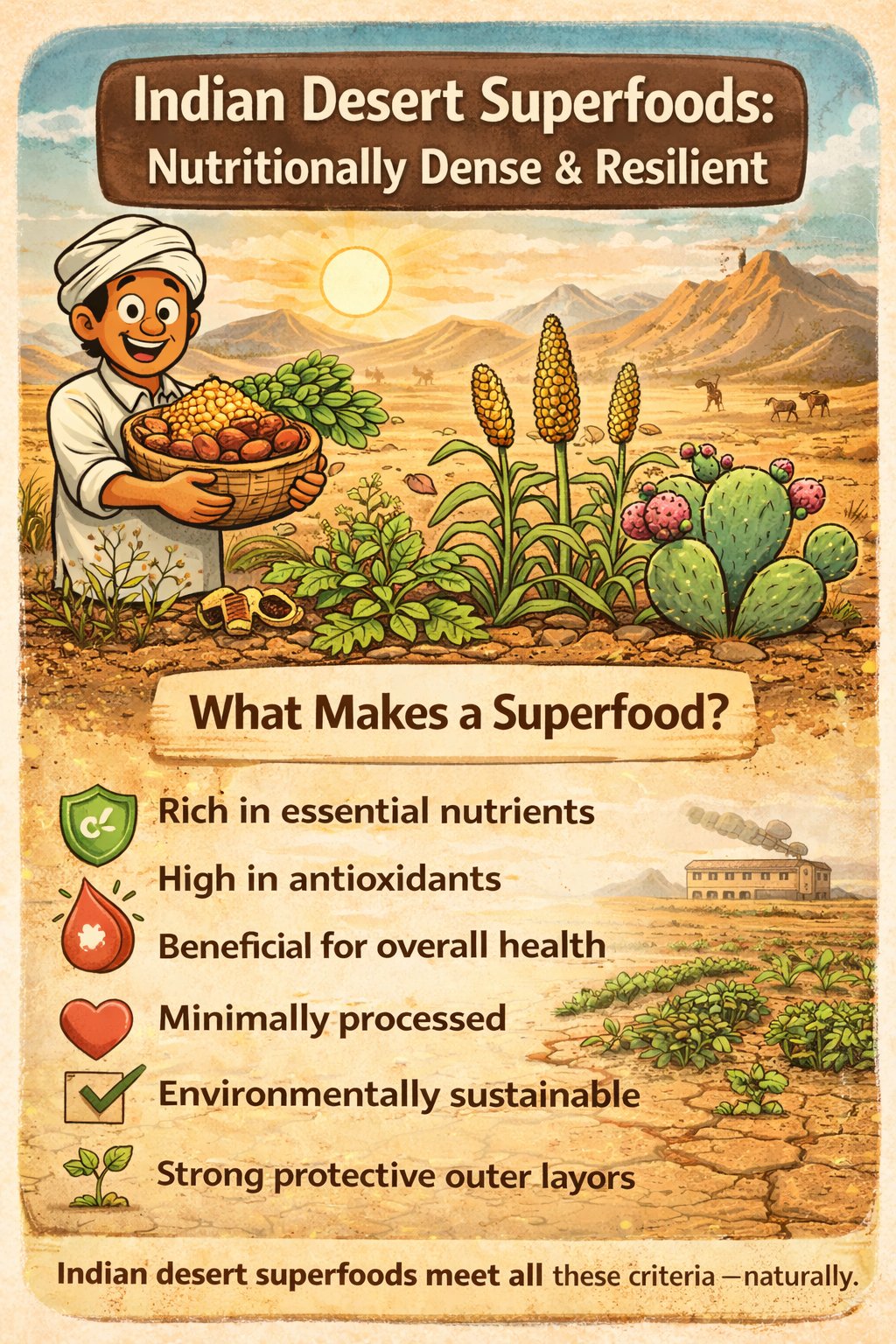
The Power of Indian Desert Superfoods
Indian desert ingredients are not just climate-resilient — they are nutritionally powerful. Their ability to survive extreme conditions often results in concentrated nutrients, making them naturally dense sources of health benefits. This is why they are increasingly recognized as superfoods. What Makes a Superfood? A superfood is generally defined as a natural ingredient that is: ● Rich in essential nutrients ● High in antioxidants ● Beneficial for overall health ● Minimally processed ● Environmentally sustainable Indian desert superfoods meet all these criteria — naturally.
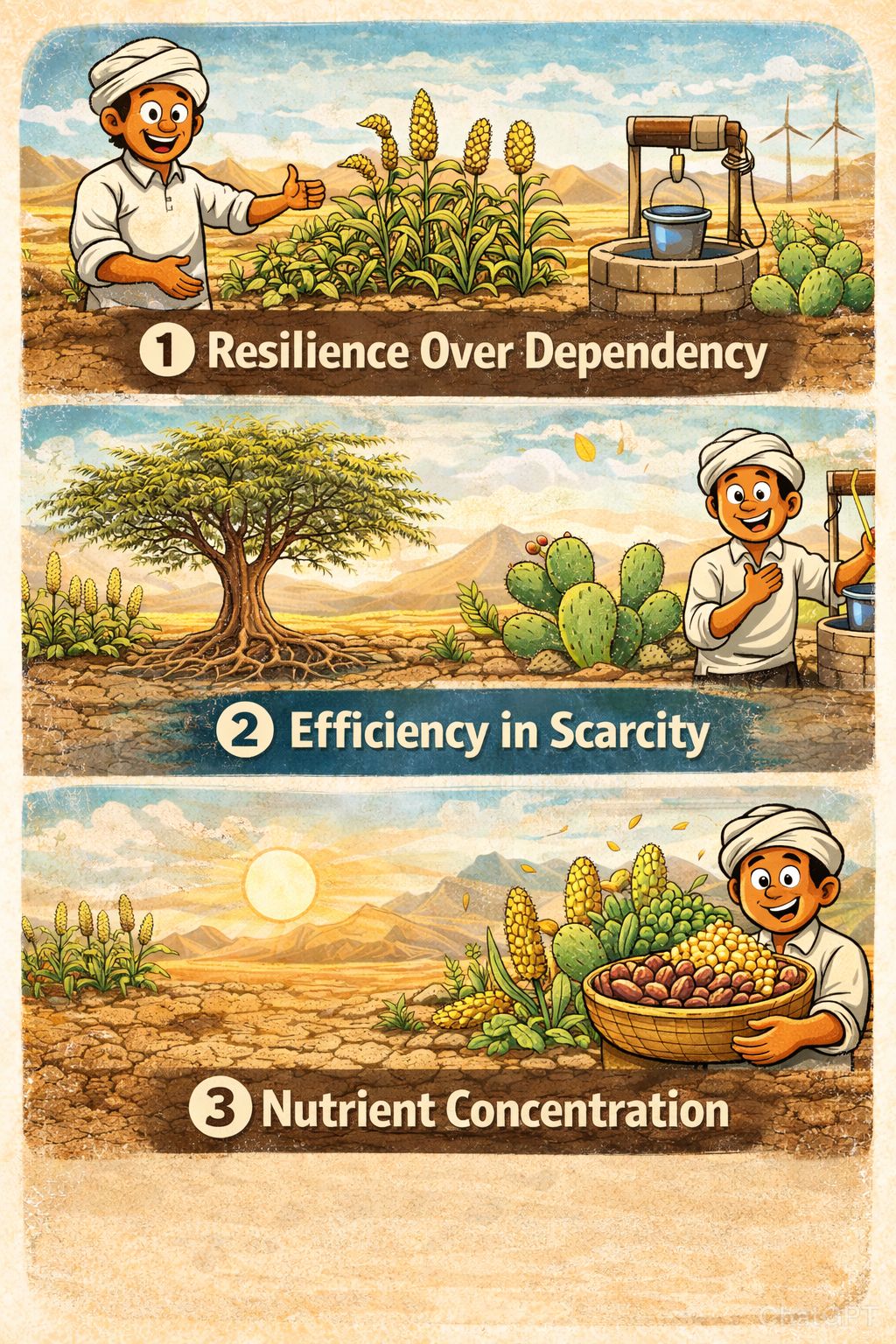
Why Desert Agriculture Is a Model for the Future
Desert agriculture teaches us three powerful lessons: 1️⃣ Resilience Over Dependency Desert crops grow with limited irrigation and often without heavy chemical input. This reduces environmental strain and promotes long-term sustainability. 2️⃣ Efficiency in Scarcity In arid regions, water is precious. Crops that survive here are naturally efficient and climate-adapted — making them suitable for a warming planet. 3️⃣ Nutrient Concentration When plants grow in extreme conditions, they often develop concentrated nutrients and robust flavors. Survival strengthens them — and strengthens us.
The Role of Conscious Consumers
As consumers become more aware of environmental impact, food choices matter more than ever. Choosing climate-smart foods means: ● Supporting sustainable agriculture ● Reducing water-intensive crop dependency ● Encouraging biodiversity ● Investing in resilient food systems Desert-grown ingredients represent a shift from excess to efficiency — from exploitation to balance.
Conclusion: Desert-Grown. Future-Ready
In a rapidly changing world, resilience is the ultimate superpower. Indian desert superfoods embody that resilience. They have survived centuries of extreme conditions — and today, they offer a blueprint for sustainable global nutrition. The future of food may not lie in creating something new. It may lie in rediscovering what has quietly thrived in the desert all along. Climate-smart. Nutrient-rich. Future-ready.